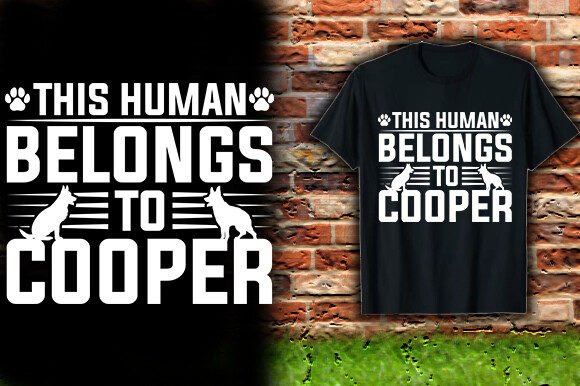
THIS HUMAN BELONGS to COOPER TSHIRT DESIGN Review
As an embroidery designer who has spent years working with both digital and hand-embroidered projects, I always look for designs that are not only visually appealing but also practical in real-world applications. THIS HUMAN BELONGS to COOPER TSHIRT DESIGN caught my attention because it promises flexibility, editability, and a range of uses across different media. In this article, I’ll walk through how the design feels on the screen and what happens when you take it from concept to finished product.
First Impressions: A Friendly, Playful Statement
The first thing I noticed about THIS HUMAN BELONGS to COOPER TSHIRT DESIGN is its personality. The phrase itself carries a sense of whimsy and charm—perfect for casual or boutique-style items. The vector shapes used in the design are clean and well-proportioned, which immediately makes me think this could work on a variety of surfaces beyond just t-shirts. Whether it's a sweatshirt, tote bag, or even a baby onesie, the layout feels balanced and legible without being too busy.
I appreciated how easy it was to modify the color palette. As someone who often needs to match brand colors or seasonal themes, the ability to tweak hues quickly is invaluable. While the exact file formats aren’t specified beyond EPS 10 and SVG, the description suggests full editability, which means no guesswork when it comes to resizing or adjusting elements.
Visual Harmony and Design Versatility
This design doesn’t scream for attention—it whispers with character. That subtlety can be a huge plus if you're aiming for something that feels personal yet professional. The use of 100 resizable vector shapes gives it a modern, crisp feel, while still allowing room for creative customization. It’s clear that the creator put thought into making each element scalable and adaptable, which is a big win for anyone planning multiple variations or product types.
Real-World Embroidery Applications
Let’s imagine using THIS HUMAN BELONGS to COOPER TSHIRT DESIGN on a custom sweatshirt for a small shop launch. The phrase is short enough to fit neatly on a chest area, and the shapes suggest it would stitch cleanly with minimal distortion. For an embroidered patch, the design might need some rethinking of spacing between letters and symbols, but again, the scalability helps there.
If I were creating personalized gifts like embroidered pillow covers or tea towels, this design could serve as a fun and recognizable signature line. Its simplicity allows it to sit comfortably next to other design elements, making it ideal for layering or combining with logos, illustrations, or patterns. On a tote bag, the design reads well from a distance, especially if using contrasting thread colors. For baby clothes, though, I’d want to simplify further—maybe using just one part of the phrase in a soft pastel tone.
As a craft business owner, I see this design fitting naturally into a range of handmade products. It’s not overly complex, so it won’t strain your machine during long runs. And because it’s ready for printing on posters and stickers, it doubles as a great branding asset for Etsy sellers or boutique owners looking to maintain visual consistency across their product lines and packaging.
Design Performance in Different Environments
- Tote Bag Design: Works great here. The flat surface allows for precise stitching, and the design’s structure translates well into fabric.
- Sweatshirt Embroidery: Requires attention to stitch density. Thicker knits may need extra stabilizer to prevent puckering.
- Baby Embroidery: Could be adapted by simplifying the text and reducing scale. Soft threads on cotton blends are recommended for comfort.
- Holiday Gift Embellishment: Adds a playful touch to gift bags, ornaments, or mugs. Just ensure thread contrast stands out against background colors.
- Commercial Embroidery: With proper testing, it could be used in bulk production for apparel or promotional items. But always check licensing terms before selling finished goods.
When to Use Caution
While THIS HUMAN BELONGS to COOPER TSHIRT DESIGN is versatile, it’s not a one-size-fits-all solution. Here are a few areas where I'd recommend careful consideration:
- Small Hoop Sizes: The design includes multiple elements and text. If you’re working with limited space, consider isolating key parts rather than trying to fit everything.
- Textured or Stretchy Fabrics: These can distort fine details or cause misalignment. Stick to medium-weight cottons or blends unless you’re prepared to test thoroughly.
- Dark Fabric Backgrounds: Thread visibility is crucial. Without sufficient contrast, the design can appear muted or unclear.
- Dense Stitch Areas: Depending on how you lay out the design, certain sections might require thinning out to avoid excessive stiffness or puckering.
- Curved Surfaces (e.g., caps): Lettering may need to be curved manually to align with the garment shape, which isn't always covered in standard embroidery files.
For handmade product creators, these limitations are worth noting, especially if you’re working with delicate materials or intricate placements. Always do a trial run on scrap fabric before moving to final pieces.
Design Impact on Customer Perception
One of the things I value most in a design is how it affects the buyer experience. THIS HUMAN BELONGS to COOPER TSHIRT DESIGN has a friendly, inclusive vibe that works well for community-focused shops or family-oriented brands. When stitched onto a tote bag or sweatshirt, it conveys a sense of belonging and playfulness—exactly what you want for personalized gifts or holiday embroidery.
However, its effectiveness depends heavily on thread choice and fabric type. A poorly chosen combination can make the design lose clarity or feel unprofessional. As a seasoned embroiderer, I’ve learned that high-quality thread and proper tension settings can elevate a good design into something memorable.
Designer Notes and Best Practices
Here are a few tips I’d share with fellow embroidery designers and creative entrepreneurs considering this design:
- Always test THIS HUMAN BELONGS to COOPER TSHIRT DESIGN on a piece of scrap fabric that matches the intended final product.
- Check thread color contrast against your fabric choices—especially important for dark backgrounds.
- Review stitch density to ensure the design doesn’t become stiff or uncomfortable after multiple washes.
- Confirm hoop size requirements. Some designs may need larger hooping than expected due to spacing or detail.
- Inspect small details for any inconsistencies. Since the design is made of 100 shapes, overlapping or misaligned vectors can happen if not properly managed.
- Use black-and-white mockups to evaluate how the design will look without color influence.
- Compare the design on light and dark fabric backgrounds to assess visibility and impact.
- Don’t skip the stabilizer step. Especially for stretchy or thin fabrics, stabilizing is key to a clean finish.
- Make sure the design fits your project goals—both personal and commercial. If you plan to sell finished items, double-check licensing terms.
Final Thoughts
THIS HUMAN BELONGS to COOPER TSHIRT DESIGN is a solid addition to your design library if you're looking for something that balances charm with adaptability. It's not flashy, but it's far from forgettable. Whether you're creating a custom apparel line for a boutique or preparing digital embroidery files for an Etsy listing, this design offers a foundation that can be molded to suit your style and market.
Its strength lies in the thoughtful structure and scalability, but its success will depend on your execution. Take time to understand how the design interacts with your chosen materials and methods. Once you get the hang of it, you'll find it’s a reliable asset for a wide array of handmade products and small shop merchandise.
In the end, it’s all about how the design enhances your finished product. THIS HUMAN BELONGS to COOPER TSHIRT DESIGN does more than just sit pretty on a screen—it invites interaction, builds brand recognition, and adds a unique voice to your creations. Just remember to treat it like any other machine embroidery design: with care, creativity, and a bit of testing along the way.